
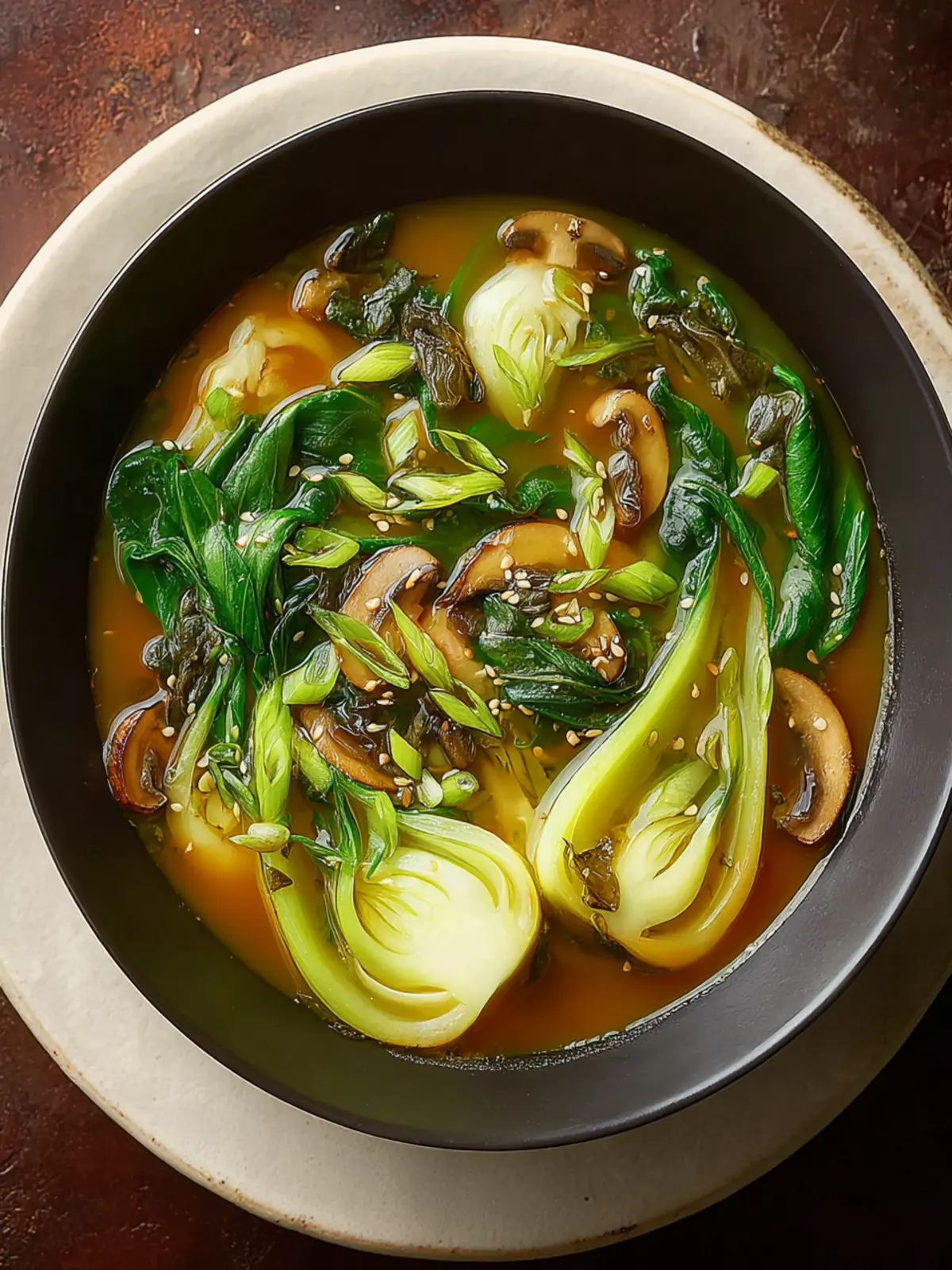
Introduction to Vegetarian Bok Choy Miso Soup
Imagine a cozy evening, wrapped in a soft blanket, with the soothing aroma of Vegetarian Bok Choy Miso Soup wafting through your home. This delightful dish, bustling with fresh flavors and vibrant colors, promises not just nourishment but also comfort. Bok choy, with its tender greens and crunchy stalks, is the star of this vibrant creation, providing a wonderful counterpoint to the rich umami of miso. Cooking this soup is almost therapeutic; the simple act of simmering ingredients together leads to a warm bowl of happiness that nourishes both body and soul.
What makes Vegetarian Bok Choy Miso Soup so comforting?
Every spoonful of vegetarian bok choy miso soup feels like a warm hug from the inside. The combination of miso paste and vegetable broth delivers an incredible depth of flavor, while the bok choy contributes a fresh, crisp texture. Rich in vitamins and minerals, this soup is not only wholesome but deeply satisfying, ideal for helping you unwind after a long day.
- Miso: This fermented soybean paste is packed with probiotics, promoting gut health and lending a savory depth to the soup that’s hard to replicate. Choosing a high-quality, organic miso can elevate your dish.
- Bok Choy: As a fantastic source of calcium, vitamin C, and antioxidants, bok choy adds more than just flavor. Its leafy greens wilt down beautifully, while the stalks remain delightfully crunchy, offering a textural contrast you’ll relish.
- Vegetable Broth: A richly flavored broth infuses the soup with a comforting warmth. Opt for low-sodium versions to control your salt intake while still capturing that savory essence.
- Additional Vegetables: Feel free to mix in whatever veggies you have on hand—carrots, mushrooms, or green onions work wonderfully and boost the nutritional profile.
This soup isn’t just a dish; it’s a delightful experience of flavors, comfort, and creativity in the kitchen. The simplicity of the ingredients and the ease of preparation make Vegetarian Bok Choy Miso Soup a staple I’m excited to share with friends and family. So, gather your ingredients and prepare to enjoy a bowlful of warmth and health!

Key Ingredients for Vegetarian Bok Choy Miso Soup
Vegetable Broth: For a vegetarian bok choy miso soup, the choice of broth makes all the difference. I love using a rich vegetable broth, whether it’s store-bought or homemade. A good broth serves as the soup’s foundation, adding depth and enhancing the overall flavor profile.
Bok Choy: Fresh bok choy is the star of the show! Its vibrant green leaves and tender yet crispy texture provide a delightful crunch. I find that using fresh bok choy not only boosts nutritional value but also maintains a beautiful color in the soup.
Shiitake Mushrooms: For an earthy flavor, I reach for shiitake mushrooms. They complement the broth perfectly and enhance the soup with their unique taste. Both fresh and dried shiitake mushrooms can work wonders here!
Tofu: Firm tofu is my protein of choice, providing a hearty bite while soaking up the delicious flavors around it. Cubed tofu offers a satisfying texture, making each spoonful truly enjoyable.
Garlic and Ginger: The aromatic duo of garlic and ginger warms my kitchen and elevates the soup with their fragrant essence. They create a depth of flavor that lingers pleasantly.
Miso Paste: Miso paste is the heart of this recipe, bringing out that umami richness we crave. I particularly favor white or yellow miso for a slightly mellow taste that allows other ingredients to shine through.
Sesame Oil: A drizzle of sesame oil at the end of cooking adds a nutty richness, acting as the finishing touch that brings all the flavors together beautifully.
Green Onions and Sesame Seeds: Finally, garnishing the soup with chopped green onions and sesame seeds not only adds freshness but also provides a delightful crunch. They enhance both the visual appeal and taste of your vegetarian bok choy miso soup!
Why You’ll Love This Vegetarian Bok Choy Miso Soup
The heartwarming allure of vegetarian bok choy miso soup lies in its perfect blend of umami and fresh flavors, inviting you to slow down and enjoy every spoonful. Imagine coming home after a busy day, and there it is waiting for you—this soothing bowl of soup that not only warms your body but also nourishes your soul.
A Nutrient-Packed Powerhouse
- Bok Choy: This vibrant green vegetable adds a delightful crunch while packing a punch of vitamins A, C, and K. You might find yourself falling in love with how easily it melds into the rich flavors of the miso broth.
- Miso Paste: Known for its probiotic benefits, miso adds a unique depth to your soup. Opting for a high-quality, organic miso makes a noticeable difference in taste and health benefits.
- Vegetables: This recipe allows you to customize your ingredient list. Think fresh mushrooms or snap peas, which elevate the texture and nutrition, making the soup even more satisfying.
- Tofu: For a dose of plant-based protein that absorbs the soup’s flavors beautifully, tofu is the go-to choice. It makes each bite hearty and fulfilling.
Whether it’s a chilly evening or a self-care ritual, this vegetarian bok choy miso soup is sure to brighten your day and become a staple in your kitchen. Embrace the warmth and nourishment it offers, making it a perfect choice for any vegetarian or anyone craving a cozy meal!
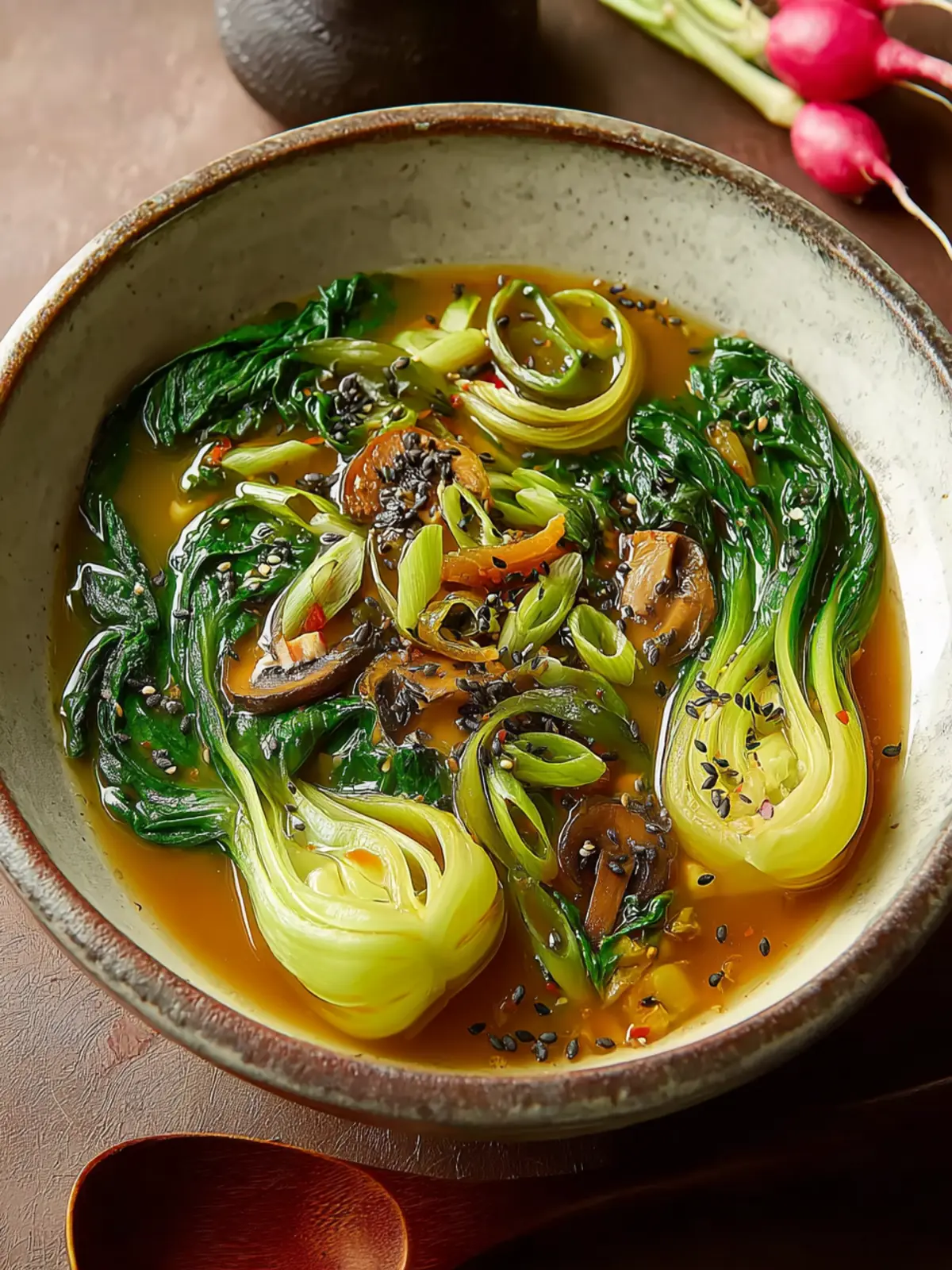
Variations of Vegetarian Bok Choy Miso Soup
Exploring the world of vegetarian bok choy miso soup opens up a delightful array of variations that can cater to your taste buds. Just a small change in ingredients can create a whole new flavor profile, ensuring that you never tire of this comforting dish.
Adding Protein Punch
For some added texture and heartiness, consider incorporating tofu into your soup. Silken tofu blends seamlessly into the broth, while firm tofu can be cubed and added for a satisfying bite. Don’t forget about edamame or chickpeas; both are excellent sources of protein and can elevate your noodle-less soup.
A Burst of Umami
To intensify that savory flavor we all crave, explore the addition of dried mushrooms like shiitake or a splash of soy sauce. They bring a depth of umami that complements the miso beautifully. Experiment with other fermented ingredients, such as kimchi or tempeh, for a more adventurous twist.
Seasonal Veggies
Take advantage of seasonal produce! Swap in kale or spinach for the bok choy, or add a mix of colorful veggies like bell peppers, carrots, and snap peas. Not only do they increase the nutritional value, but they also add visual appeal and crunch to your soup.
Each variation not only caters to different dietary needs but also invites you to get creative in the kitchen. With vegetarian bok choy miso soup, the possibilities truly are endless. What will you try next?
Cooking Tips and Notes for Vegetarian Bok Choy Miso Soup
Creating a satisfying bowl of vegetarian bok choy miso soup can be a delightful experience that warms both the heart and the belly. Here are some cooking tips to help you perfect this comforting dish.
Choosing Your Ingredients
- Miso Paste: The soul of your soup, miso paste adds depth and richness. Choose a variety that suits your palate—white miso is milder, while red miso provides a stronger flavor. You can even blend them for a unique taste.
- Bok Choy: Fresh bok choy is a must for this recipe. Aim for vibrant green leaves and firm, crisp stems. If bok choy isn’t available, you can substitute with other leafy greens like spinach or kale to keep the nutrient levels high.
- Vegetable Broth: Use a high-quality broth for the base of your soup. Homemade broth can elevate flavors, but store-bought options work perfectly too—just be mindful of its salt content.
Cooking Techniques
- Sautéing: Begin by sautéing your garlic and ginger. This step enhances their flavors, making your soup aromatic and inviting.
- Adding Ingredients: Add bok choy towards the end of cooking to prevent it from becoming overcooked. The leaves should wilt but remain vibrant and slightly crunchy.
- Taste and Adjust: Once your soup is ready, give it a taste. Adjust the saltiness with more miso or a splash of soy sauce, depending on your preference.
Serving Suggestions
Serve your vegetarian bok choy miso soup with a sprinkle of sesame seeds or chopped green onions for an added touch of flavor and presentation. It pairs wonderfully with a side of rice or crusty bread to make it a complete meal. Enjoy crafting this wholesome soup that nourishes both body and spirit!
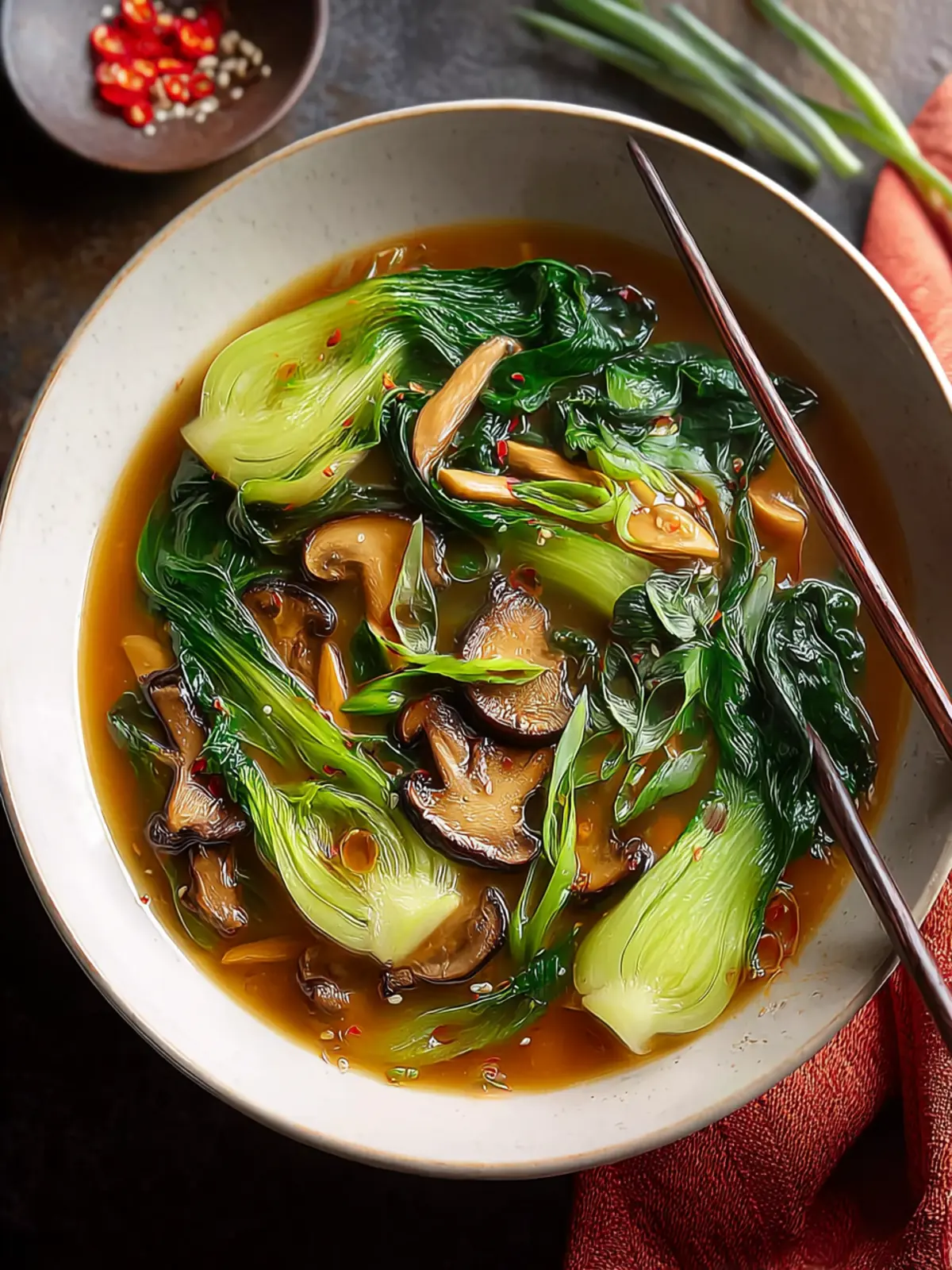
Serving Suggestions for Vegetarian Bok Choy Miso Soup
No meal feels as comforting as a warm bowl of vegetarian bok choy miso soup. Picture yourself after a long day, the soothing aroma wafting from your kitchen, inviting you to take a seat and enjoy the tranquil essence of this delicious dish. Now, let’s explore some delightful ways to serve this soulful soup.
Complement Your Soup
Pair your vegetarian bok choy miso soup with a variety of side dishes to elevate your dining experience:
- Steamed Rice: A bowl of fluffy jasmine or brown rice acts as the perfect sponge to soak up the rich broth.
- Rice Noodles: For a heartier option, consider adding cooked rice noodles right into your bowl, giving a delightful twist to the traditional soup.
Garnishes for Extra Flavor
Enhance the experience with a few simple toppings:
- Green Onions: Chopped green onions add a fresh crunch.
- Sesame Seeds: A sprinkle of toasted sesame seeds introduces a nutty flavor that complements the miso beautifully.
- Chili Oil or Flakes: For those who like a little heat, a drizzle or pinch will do the trick.
Perfect for Meal Prep
This soup keeps well, making it an excellent addition to your weekly meal prep. Store individual servings in airtight containers, and you’ll always have a healthy, warming meal at your fingertips.
With these serving suggestions, your vegetarian bok choy miso soup will not only be a warm embrace in a bowl but also a delightful centerpiece in your culinary repertoire. Enjoy!
Time Breakdown for Vegetarian Bok Choy Miso Soup
Making a comforting bowl of vegetarian bok choy miso soup is a delightful endeavor that doesn’t require much time at all. Here’s how the time breaks down for this nourishing dish:
Preparation Time
Getting everything ready for your soup takes about 10 minutes. This includes washing and chopping the bok choy and gathering your ingredients.
Cooking Time
Once you’ve prepped, the actual cooking part comes in at around 15 minutes. It’s a quick process where the ingredients come together beautifully.
Total Time
In just 25 minutes, you can have a warm, delicious bowl of vegetarian bok choy miso soup ready to enjoy. It’s perfect for a busy weeknight or a relaxing weekend meal!
Nutritional Facts for Vegetarian Bok Choy Miso Soup
When craving a warm bowl of vegetarian bok choy miso soup, you’ll appreciate the delightful nutrition packed into each serving. Let’s break down the nutritional highlights that make this dish not just delicious but also health-conscious.
Calories
A serving of this vegetarian bok choy miso soup typically has around 120 calories. This makes it a light yet satisfying option, ideal for a comforting meal without worrying about excessive calorie intake.
Protein
One of the standout features of this soup is its protein content, averaging about 6 grams per serving. While not a major source, it still contributes to your daily protein needs, especially when paired with other nutritious ingredients.
Sodium
With approximately 800 mg of sodium per serving, it’s vital to enjoy this dish thoughtfully, especially if you’re monitoring your salt intake. Opting for low-sodium miso paste can help reduce this amount while still delivering that rich, umami flavor we love.
Incorporating vegetarian bok choy miso soup into your diet not only warms the soul but also nourishes your body!
FAQ about Vegetarian Bok Choy Miso Soup
When it comes to vegetarian bok choy miso soup, this comforting dish is a delightful way to warm up on a chilly day. It’s packed with fresh ingredients and bursting with flavor, but you may have some questions about customizing it to fit your needs.
How can I make this soup gluten-free?
If you’re looking to enjoy a gluten-free version of your vegetarian bok choy miso soup, it’s simple! Start by replacing regular soy sauce with tamari, which is naturally gluten-free. Additionally, ensure the miso paste you choose is labeled gluten-free, as many brands contain wheat. This way, you can enjoy the same savory depth of flavor without any of the gluten.
Can I add more vegetables?
Absolutely! One of the great things about this vegetarian bok choy miso soup is its versatility. Feel free to experiment by adding vegetables based on your preferences or what’s in your fridge. Carrots, mushrooms, or snap peas can complement the dish beautifully. Not only will this enhance the flavor, but it will also boost the nutritional content.
How long do leftovers last?
If you’re lucky enough to have leftovers from your vegetarian bok choy miso soup, store them in an airtight container in the fridge. They should stay fresh for about 3 to 4 days. Just remember, if you decide to reheat, do so gently to avoid overcooking the bok choy. If you think you won’t finish them in time, consider freezing the soup for later enjoyment, though the texture of the bok choy may change after freezing. Enjoy your soup adventures!
Conclusion on Vegetarian Bok Choy Miso Soup
Bringing together the delicate flavors of vegetarian bok choy miso soup creates a restorative bowl that nourishes not just the body but also the soul. As you savor each spoonful, you’ll appreciate how the umami-rich miso and fresh bok choy create a harmony of tastes that uplift your day. Plus, it’s a versatile recipe that you can adapt with your favorite vegetables or tofu for added protein. Whether you enjoy it as a light lunch or a cozy dinner, this soup demonstrates that vegetarian options can be both comforting and satisfying. So why not share this recipe with friends and make it a staple in your kitchen?
Print
Vegetable Miso Soup
- Total Time: 25 minutes
- Yield: 4 servings 1x
- Diet: Vegetarian
Description
A comforting and nutritious vegetable miso soup packed with flavors and healthy ingredients.
Ingredients
- 4 cups vegetable broth
- 2 cups bok choy (chopped)
- 1 cup shiitake mushrooms (sliced)
- 1 cup tofu (cubed)
- 1 small carrot (sliced)
- 2 cloves garlic (minced)
- 1 inch ginger (grated)
- 3 tablespoons miso paste (white or yellow)
- 1 tablespoon soy sauce (optional)
- 2 teaspoons sesame oil
- 2 tablespoons green onions (chopped)
- 1 tablespoon sesame seeds (toasted)
Instructions
- In a saucepan, bring the vegetable broth to a simmer over medium heat.
- Add the garlic, ginger, and sliced carrots. Cook for about 5 minutes.
- Stir in the bok choy and shiitake mushrooms. Cook for another 5 minutes until the vegetables are tender.
- In a small bowl, mix the miso paste with a ladle of hot broth until smooth, then stir it back into the soup.
- Add the cubed tofu and soy sauce, and heat through for another 2-3 minutes.
- Ladle the soup into bowls and drizzle with sesame oil. Garnish with green onions and sesame seeds.
Notes
- This soup can be customized with any seasonal vegetables you have on hand.
- Adjust the amount of miso to taste for desired saltiness.
- Prep Time: 10 minutes
- Cook Time: 15 minutes
- Category: Soup
- Method: Stovetop
- Cuisine: Japanese
Nutrition
- Serving Size: 1 bowl
- Calories: 150
- Sugar: 3g
- Sodium: 800mg
- Fat: 6g
- Saturated Fat: 1g
- Unsaturated Fat: 4g
- Trans Fat: 0g
- Carbohydrates: 20g
- Fiber: 3g
- Protein: 10g
- Cholesterol: 0mg
